

























 ChatGPT
 Perplexity
 Google AI
Ever waited hours for a truck to arrive, only to find out the shipment was delayed, rerouted, or worse, lost in paperwork? Frustrating, isn’t it? That’s exactly the kind of headache shippers, carriers, and logistics managers deal with every single day.
Now imagine an app that connects shippers with carriers instantly, much like how Uber connects drivers with passengers. That’s the promise of Uber Freight, a platform that has redefined how freight moves by bringing transparency, speed, and automation into an industry notorious for inefficiency.
But here’s the real question: What if you could build your own version of Uber Freight? What would it take? How much would it cost? And more importantly, how can it give your business a competitive edge in 2025’s fast-moving logistics landscape?
The timing couldn’t be better. With the global freight matching market projected to reach past $766 billion by 2034, and over 60% of logistics companies still struggling with manual processes, the opportunity is huge. Businesses that embrace custom freight apps now won’t just keep up—they’ll lead.
In this guide, we’ll break down how to build an app like Uber Freight, essential features you’ll need, the development costs in 2025, and the benefits that make it worth the investment.
Build Your Own Uber-Style Freight App with AppVerticals
Our team specializes in building custom logistics apps designed for scalability, automation, and real-time visibility.
Key Takeaways
- The global freight matching market is projected to surpass $766B by 2034, making now the best time to invest in digital freight platforms.
- Building an app similar to Uber Freight requires three core pillars: a feature-rich Shipper App, a seamless Driver App, and a data-driven Admin Dashboard.
- Costs range from $60K for an MVP to $250K+ for enterprise-grade solutions, depending on features, tech stack, and scalability needs.
- Must-have features in 2025 include real-time GPS tracking, AI-powered load matching, digital proof of delivery, and integrated payments.
- Choosing the right technology stack (React Native/Flutter, Node.js/Python, PostgreSQL/MongoDB, AWS/GCP/Azure) directly impacts performance and long-term growth.
- A custom logistics app delivers lower costs, faster payments, improved visibility, and stronger shipper–carrier relationships, giving businesses a clear competitive edge.
The 3 Core Pillars of Uber Freight–Style App Development
In today’s logistics landscape, digital freight platforms are doing what Uber did for mobility, bringing speed, visibility, and simplicity to an industry long reliant on phone calls and paper-based processes. To build a successful app like Uber freight, businesses must focus on three essential pillars: the Shipper App, the Driver App, and the Admin Dashboard. Together, they form the foundation of a scalable and user-friendly freight ecosystem.
Shipper App
The Shipper App is the central interface for businesses that need to move goods, ensuring they can connect with carriers quickly and transparently.
Key Features:
- Simple Onboarding & Profiles: Allow shippers to create accounts, manage business details, and save payment preferences for faster bookings.
- Load Posting & Bidding: Publish freight details instantly, set requirements, and receive real-time bids from nearby carriers.
- Real-Time Tracking: Use GPS-enabled tracking to monitor shipments live, from pickup to delivery.
- Secure Payments: Enable shippers to complete transactions through integrated gateways with full transparency.
- Ratings & Feedback: Promote trust by letting shippers review carrier performance after each delivery.
UI/UX Tips:
- Keep onboarding simple with auto-fill for business details and progress indicators.
- Use clean dashboards with tabs for “My Loads,” “Payments,” and “Tracking” to avoid clutter.
- Highlight active shipments with color codes (e.g., in-progress = blue, completed = green).
- Provide interactive maps so shippers can zoom in/out and track deliveries in real-time.
Driver App
The Driver App acts as the control hub for carriers, empowering them to find jobs faster, manage deliveries efficiently, and stay connected on the go.
Key Features:
- Quick Registration & Verification: Fast onboarding with digital document uploads and identity checks.
- Instant Job Alerts: Push notifications for available loads nearby, with filters for distance, weight, or deadlines.
- Navigation & Route Optimization: Built-in maps and AI-powered route suggestions for fuel efficiency and reduced delivery time.
- Earnings Dashboard: Transparent visibility into completed jobs, payments, and bonuses.
- Digital Proof of Delivery (ePOD): Drivers can upload delivery confirmations directly from the app, cutting paperwork.
UI/UX Tips:
- Use large, high-contrast buttons for on-the-go use.
- Display earnings and next job status on the home screen for quick visibility.
- Add voice-enabled navigation and notifications to reduce distractions.
- Keep menus minimalist, showing only key actions: “Available Loads,” “Current Job,” and “Earnings.”
Admin Dashboard
The Admin Dashboard is the backbone of the entire platform, giving businesses and operators the tools to monitor, optimize, and scale logistics operations.
Key Features:
- User & Fleet Management: Oversee shippers, carriers, and fleets while ensuring compliance and verification.
- Advanced Analytics: Real-time insights into delivery success rates, average trip costs, and operational bottlenecks.
- Pricing & Commission Control: Dynamic rate management to balance market demand with carrier availability.
- Risk & Safety Management: Tools for fraud detection, load authenticity checks, and emergency support.
- System Maintenance & Scalability: Ensure smooth updates, integration readiness, and high uptime.
UI/UX Tips:
- Use visual dashboards with charts, KPIs, and heatmaps to simplify decision-making.
- Offer role-based access so admins, dispatchers, and managers see only what they need.
- Integrate search and filter options for quick access to user or load data.
- Make sure the interface is responsive for both desktop and tablet use.
By focusing on these three pillars, and pairing them with thoughtful UI/UX design—entrepreneurs can create a freight app that balances usability, efficiency, and trust, setting the stage to compete with, and even outperform, Uber Freight.
How to Build an App like Uber Freight – Step-by-Step Guide
Developing a freight app like Uber Freight requires more than just writing code. It takes strategy, market knowledge, and the right technology partner. Here’s a step-by-step breakdown for businesses and entrepreneurs looking to enter the digital freight space.

Step 1: Define Your Logistics Niche (FTL, LTL, Courier, Last-Mile)
Before development, clarify the segment you’ll target—full truckload (FTL), less-than-truckload (LTL), courier, or last-mile delivery.
Why it matters for business: Your choice impacts not only the app’s design and features but also its monetization model and long-term scalability.
Example: A last-mile delivery app needs route optimization and driver tracking, while an FTL-focused platform needs advanced bidding and load-matching features.
You can learn more about that in our detailed guide around the essential features of a freight management system.
Step 2: Partner with a Logistics App Development Company
Your development partner can make or break your project. Choose a trusted logistics software development company that specializes in freight and supply chain technology.
What to look for in a partner:
- Experience in building freight management apps.
- Proven expertise in real-time tracking, AI-based automation, and scalable infrastructure.
- End-to-end services: ideation, UX/UI, development, launch, and post-launch support.
This ensures your app isn’t just functional, but reliable, secure, and built for high user load.
Step 3: Validate the Idea with Market Research
Don’t build blindly. Validate your concept before investing heavily:
- Conduct competitor analysis of apps like Uber Freight, Convoy, and Transfix.
- Interview shippers, carriers, and dispatchers to understand real-world pain points.
- Use surveys and pilot programs to refine your app’s core feature set.
ROI insight: The earlier you validate, the fewer pivots you’ll need—reducing wasted development costs.
Step 4: Build and Launch the MVP
Start lean with a Minimum Viable Product (MVP). Include core features like:
- Load posting & bidding.
- Shipper–carrier matching.
- Live GPS tracking.
- In-app chat & notifications.
Keep your initial logistics app development cost in check while collecting real-world feedback from early adopters.
Step 5: Analyze, Iterate, and Scale Smart
After launch, gather data on:
- Booking trends.
- Driver performance.
- Shipper engagement.
Enhance your app by adding AI-based load recommendations, predictive ETA algorithms, or integrations with TMS/ERP systems. This continuous improvement model ensures your platform scales effectively and outpaces traditional freight management systems.
How Much Does It Cost to Build an App like Uber Freight
One of the biggest questions businesses ask is: “How much does it cost to build an app like Uber Freight?” The answer depends on your feature set, technology stack, and development partner, but here’s a clear breakdown to guide you.
1. Basic MVP Freight App – $60,000 to $90,000
Includes core features like:
- User registration & authentication
- Shipper–carrier matching
- Load posting & bidding
- GPS-based tracking
- Push notifications
Best for startups testing the waters with a simple, functional freight app.
2. Mid-Range Logistics App – $90,000 to $150,000
Adds advanced features such as:
- AI-based load recommendations
- Dynamic route optimization
- Integrated payment gateways
- Analytics dashboard for shippers and carriers
Suitable for growing businesses that need automation and visibility to compete in the digital freight market.
3. Enterprise-Grade Freight Platform – $150,000 to $250,000+
Includes high-scale, enterprise-level features like:
- Multi-role access (shippers, carriers, dispatchers, admins)
- API & ERP/TMS integrations
- Advanced compliance & reporting
- Machine learning–based demand forecasting
- Scalable cloud infrastructure (AWS, Azure, or GCP)
Designed for logistics enterprises aiming to replace legacy systems with a fully digital freight ecosystem.
Key Factors That Affect Cost
- Feature complexity: AI, predictive analytics, and integrations increase costs.
- Platform choice: iOS, Android, or cross-platform.
- Design & UX: Custom dashboards and user-friendly workflows.
- Post-launch support: Maintenance, updates, and feature expansion.
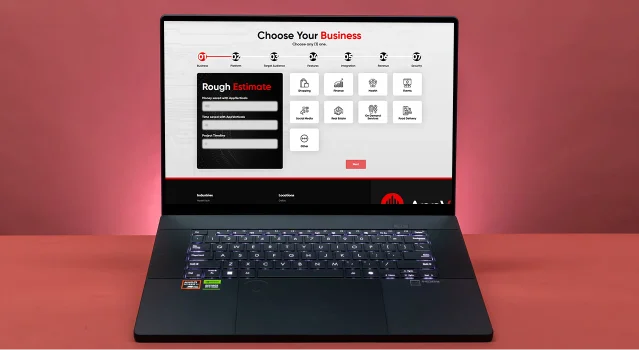
Get a Custom Freight App Cost Estimate
Get a tailored cost breakdown for your Uber Freight–style app.
Essential Features for an Uber Like App Solution
Building a successful freight app isn’t just about connecting shippers and carriers, it’s about solving real logistics challenges. Below are the must-have features for your app in 2025.
1. Real-Time GPS Tracking
- Keep every shipment visible from pickup to delivery.
- Enables shippers and carriers to monitor load movement.
- Reduces delays by providing accurate ETAs.
- Improves trust and visibility in the supply chain.
Learn more about visibility in our thorough guide about Logistics Dashboards.
2. Smart Load Matching & Bidding
Ensure the right load goes to the right carrier at the best price.
- AI-powered algorithms match loads with the right carriers.
- Shippers get competitive pricing, while carriers maximize utilization.
- Cuts down empty miles and boosts operational efficiency.
3. Integrated Payment Solutions
Simplify transactions and keep payments flowing seamlessly.
- Supports multiple payment methods (ACH, cards, digital wallets).
- Automates invoicing and reduces disputes.
- Speeds up cash flow for carriers.
4. In-App Messaging & Notifications
Keep shippers, drivers, and dispatchers connected in real time.
- Push notifications for load acceptance, delivery updates, and payment confirmations.
- Reduces reliance on phone calls and emails.
- Improves coordination and reduces delays.
5. Document Upload & Digital Proof of Delivery (ePOD)
Go paperless while keeping compliance in check.
- Upload bills of lading, invoices, and compliance documents.
- Capture signatures and delivery proof digitally.
- Reduces paperwork and compliance risks.
6. Analytics Dashboard
Turn freight data into actionable business insights.
- Provides insights into shipment history, performance metrics, and costs.
- Helps shippers optimize spending and carriers improve efficiency.
- Creates transparency that drives long-term adoption.
Advanced Features to Stay Competitive in 2025
If you want to outpace competitors like Uber Freight and Convoy, consider adding:

- AI-powered demand forecasting for better capacity planning.
- Dynamic route optimization to reduce fuel and time costs.
- Blockchain-based contracts for transparent and tamper-proof agreements.
- Integration with IoT devices (temperature sensors, RFID, etc.) for specialized freight.
Technology Stack for Building Freight Apps
Choosing the right technology stack for logistics apps is one of the most critical steps in creating a scalable, high-performance freight platform like Uber Freight. The right tools ensure faster development, seamless integrations, and long-term adaptability as your business grows. Here is a breakdown of the key technologies most commonly used in freight app development:
Frontend: React Native vs Flutter
| Framework | Key Strengths | Best Use Case in Freight Apps |
|---|---|---|
| React Native | Cross-platform with native-like performance, reusable components, strong ecosystem. | Ideal when you want faster time-to-market and reusable code for both iOS & Android. |
| Flutter | Rich pre-designed widgets, smooth UI, near-native speed, backed by Google. | Best for building visually rich, highly interactive freight apps with consistent UI across devices. |
Backend: Node.js vs Python (Django) vs Express.js
| Backend Option | Key Strengths | Best Use Case in Freight Apps |
|---|---|---|
| Node.js | Handles asynchronous events efficiently, lightweight, scalable. | Great for real-time tracking, notifications, and instant updates. |
| Python (Django) | Robust, secure, enterprise-grade, perfect for large data sets. | Best for complex freight platforms needing heavy data processing and compliance. |
| Express.js | Minimalistic Node.js framework, easy to build APIs fast. | Ideal for quick MVP development or lightweight API layers. |
Database: PostgreSQL vs MongoDB
| Database | Key Strengths | Best Use Case in Freight Apps |
|---|---|---|
| PostgreSQL | ACID-compliant, highly reliable, strong for transactions. | Best for transaction-heavy freight operations (payments, contracts). |
| MongoDB | NoSQL, scalable, flexible for unstructured data. | Best for document storage (ePOD, invoices, Bills of Lading). |
APIs & Integrations
| Service | Purpose | Why It Matters for Freight Apps |
|---|---|---|
| Twilio | Real-time messaging & notifications. | Keeps shippers & drivers updated instantly. |
| Google Maps API | GPS tracking, optimized routing. | Enables accurate location services & ETAs. |
| Stripe | Secure payment gateway. | Ensures safe transactions between shippers & carriers. |
| AWS S3 | Cloud document storage. | Stores ePOD, invoices, BOLs securely. |
| SendGrid | Transactional emails. | Delivers status updates & confirmations reliably. |
Cloud Hosting: AWS vs GCP vs Azure
| Cloud Provider | Key Strengths | Best Use Case in Freight Apps |
|---|---|---|
| AWS | Industry leader, wide service range, reliable. | Best for large-scale freight apps needing high uptime & global reach. |
| GCP | Advanced AI/ML tools, Kubernetes support. | Ideal for real-time analytics & predictive logistics. |
| Azure | Enterprise-grade, seamless with Microsoft tools. | Best for enterprise logistics companies using Microsoft ecosystem. |
Your freight app technology stack directly impacts scalability, speed, and cost-efficiency. Choosing the right combination of tools ensures your platform can adapt to industry changes, integrate AI-driven features, and deliver the reliability that shippers and carriers expect from Uber Freight–style solutions.
Key Benefits of Building a Logistics App like Uber Freight
Investing in a custom freight app isn’t just about going digital—it’s about unlocking scalability, efficiency, and profitability. Here’s how businesses benefit from Uber Freight–style solutions in 2025.
1. Reduced Operational Costs
Automation lowers expenses and eliminates inefficiencies.
- AI-powered load matching reduces empty miles.
- Digital documentation cuts admin costs.
- Route optimization saves fuel and driver hours.
2. Improved Supply Chain Visibility
Real-time insights build trust and speed up decision-making.
- GPS tracking provides shippers with live updates.
- Analytics dashboards highlight cost leaks and performance trends.
- Transparent operations improve customer retention.
3. Faster Payments and Better Cash Flow
Integrated payments remove financial bottlenecks.
- Automated invoicing shortens billing cycles.
- Carriers receive quicker payouts.
- Reduced disputes mean smoother relationships.
4. Enhanced Shipper–Carrier Relationships
Better collaboration strengthens long-term partnerships.
- In-app messaging streamlines communication.
- Digital proof of delivery reduces trust issues.
- Reliability encourages repeat business.
5. Scalability and Competitive Edge
Future-ready platforms grow with your business.
- Easily add features like AI forecasting or IoT integrations.
- Scale from MVP to enterprise-grade without starting over.
- Stay ahead of competitors relying on outdated systems.
Transform Your Freight Business with Digital Innovation
Let’s help you design a scalable, Uber Freight–style solution built for growth.
Is It Worth Building an Uber Freight–Style App?
The freight industry is rapidly shifting toward digitization and automation. With platforms like Uber Freight proving the value of on-demand logistics, businesses that adopt similar models are seeing:
- Lower operational costs.
- Stronger shipper–carrier relationships.
- Greater efficiency and real-time supply chain visibility.
Whether you’re a startup exploring MVP development or an enterprise looking to replace outdated systems, investing in a custom logistics app development company can future-proof your business and give you a lasting competitive advantage.
Ready to Build Your Uber Freight–Style App?
Let’s turn your idea into a high-performing freight platform.